Solutions
Migration & Modernization
Move from fragile infrastructure to a production-grade platform — without stalling product delivery.
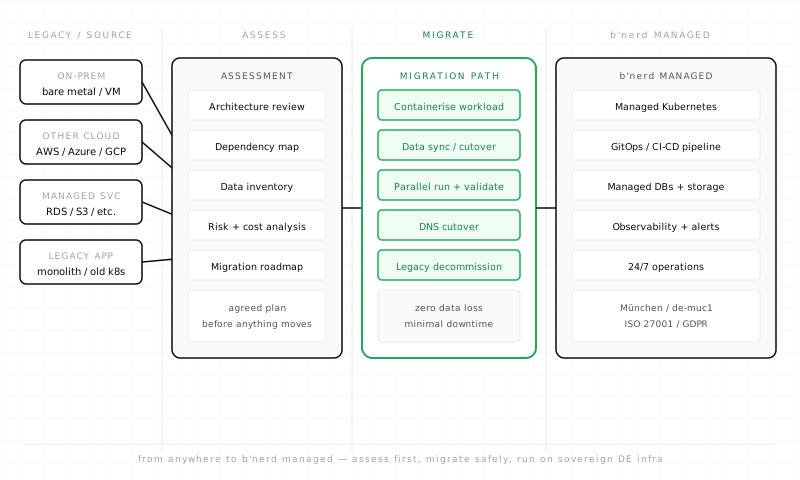
A phased, reversible approach that stabilizes first, standardizes second, and migrates safely workload-by-workload.
- Phased and reversible
- Approach
- Stabilize → migrate
- Order
- Model included
- Operations
Who it's for
- • Teams with self-hosted Kubernetes where upgrades hurt
- • Legacy VMs and snowflake servers
- • Organizations afraid of modernization due to complexity
- • Workloads that can't afford downtime during change
Typical pains we remove
- • Big-bang migration pressure
- • Tooling sprawl and partial adoption
- • No clear ownership of day-2 operations
- • Security and observability added too late
How we approach it
Pragmatic: stabilize → standardize → migrate → operate. Every step is reversible.
Stabilize
Make production predictable before moving anything.
- • Observability baseline
- • Backup strategy + restore tests
- • Upgrade plan
Standardize
Reduce complexity with conventions and repeatability.
- • GitOps/IaC conventions
- • Golden cluster patterns
- • Environment consistency
Migrate and operate
Move workload-by-workload and keep it boring afterwards.
- • Safe cutover playbooks
- • Runbooks + incident routines
- • Continuous improvement
Reference stack
A modernization-ready baseline:
- • Kubernetes + controlled ingress
- • CI/CD + GitOps conventions
- • Central logging/metrics/tracing
- • Backups + restore drills
FAQ
-
Usually yes. We focus on the platform and operating model first, then modernize gradually where it brings real value.
-
Often yes. We assess the current state, define a baseline, stabilize upgrades and observability, then plan migration steps if needed.
-
No. We plan phased migrations and prefer workload-by-workload cutovers with rollback strategies.
Want a practical modernization plan?
Tell us what you run today. We'll propose a phased next step that reduces risk and complexity.
Do you have questions or would you like a personalized offer? We are happy to advise you.
Contact
Contact
Our cloud experts are happy to provide personalized advice.
- Our Office
-
Sillemstraße 76A
20257 Hamburg, Deutschland
Mon - Fri: 09:00 AM - 06:00 PM
- Telefon
- +49 40 239 69 754 0
- hello@bnerd.com